

Access Control — Know Exactly Who Gets In
Locks and keys stop working the day someone quits and doesn't hand the key back. Access control replaces that headache: you decide who gets in, which doors, and when — and you can change it in seconds instead of re-keying a building.
We install commercial and multi-tenant access control across Queens, the Bronx, and Westchester, from a single storefront door to a full building of tenants.
We are City Electric & Communications, a family-owned low-voltage shop in Jamaica, Queens.
We can add access control to doors you already have, tie it into your cameras and intercom, and George inspects every install before it is signed off.
How access control actually works
At each controlled door there are a few parts working together: a reader (keypad, card, or fob), a controller that makes the decision, a locking device, and a request-to-exit and door-position sensor so the system knows when the door is used. Someone presents a credential, the controller checks it against your rules — is this person allowed, at this door, at this time — and either releases the lock or denies it and logs the attempt. Every event is recorded, which is the part keys can never do: you get an audit trail of who went where and when.
The locking device is where a lot of installs go wrong. A magnetic lock (mag lock) holds the door shut with an electromagnet and fails open when power drops — good for glass and code-sensitive egress, but it must be tied correctly to the fire alarm and exit hardware. An electric strike releases the existing latch and can fail secure or fail safe depending on the door's job. Picking the wrong one creates either a door that traps people or a door that pops open in a power blip. We spec the hardware to the specific door, the traffic, and the egress and ADA rules that apply to it.
Fobs, cards, keypads — and what to actually use
Keypads use a code — cheapest, no credential to hand out, but codes get shared and rarely changed. Cards and fobs are assigned to a person, so you can turn one off the moment they leave without touching anyone else's access; fobs are durable on a keyring, cards double as IDs.
Mobile credentials — a phone as the key — are increasingly common and convenient for offices with turnover. For higher-security doors, we combine methods: a fob plus a PIN, for example. Most buildings mix them — a keypad on a back door, fobs for staff, mobile for management — and we help you match the credential to each door instead of forcing one everywhere.
Cloud or on-prem, single door or whole building
Access control can run on a local controller in your building or through a cloud platform you manage from a browser or phone. Cloud is the practical choice for most clients now: you add or revoke a tenant or employee remotely, pull an audit trail from anywhere, and get software updates without a service call. On-prem still makes sense where a client wants everything to stay in the building or has no reliable internet.
We install both and tell you which fits your operation and budget rather than defaulting to whatever we stock.
For multi-tenant buildings — a common Queens and Bronx job — the value is management: each tenant gets their own credentials, the lobby and common doors are controlled, and property management can grant or cut access without a locksmith.
Tie the front door to a
video intercom so tenants buzz guests in from their phones, and to
video surveillance so a badged entry pulls up the door camera. It all rides on clean
structured cabling, which is why we handle that in-house.
Retrofits
We Add Access Control to Doors You Already Have
The most practical access control project isn't always a full rip-and-replace. City Electric's approach starts with your existing doors, frames, and hardware. We assess what's already there — hinges, closers, strike plates, existing wiring — and design a system that integrates cleanly rather than requiring unnecessary demolition or new door installations. Where the door works, we build on it.
We tie access control into the cameras and intercoms already on site. If you're running a camera system we installed or took over, we can link door-open events to timestamped camera footage, so you're not just logging who badged in — you can see it. Same goes for intercom and IP video entry: one credential, one audit trail, one system you manage from a single interface. We handle the low-voltage wiring, controller programming, and credential setup, and we stay on for maintenance after the job is done.
We are honest about scope, too. If a door only ever needs a good deadbolt, we will say so. If a mag lock would create an egress problem, we will not install it just because you asked. And where an old system already has usable readers and wiring, we adopt and modernize it instead of ripping it out — see
system takeovers & maintenance. We install across
Queens and the
Bronx.
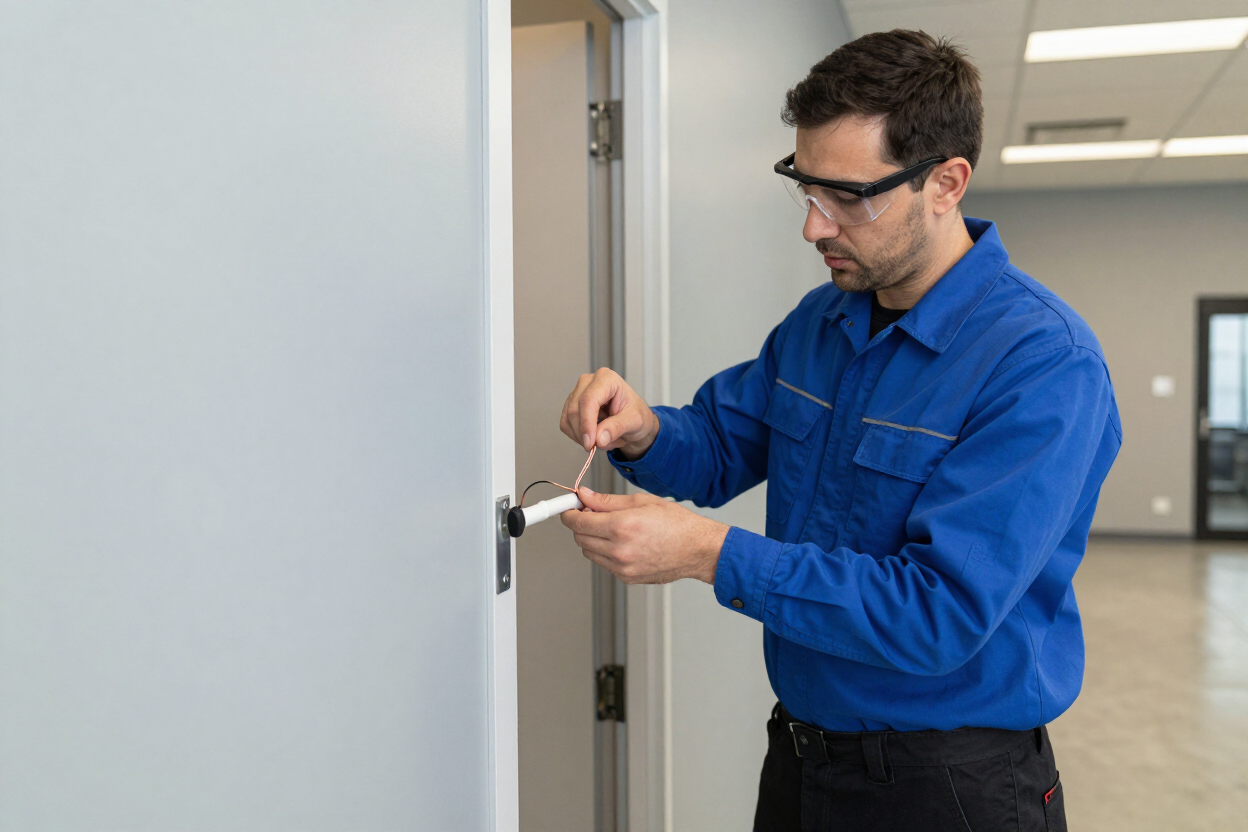
One System, Every Building Type
Access control scales with the building. Whether you're locking one back-office door or managing credential lists across a multi-tenant building with staff, tenants, and vendors all needing different levels of access, the same platform handles it. Here's how City Electric approaches each building type.
Offices & Storefronts
One or two controlled entry points, keypad or fob credential, audit log of who entered and when. Ideal for small teams or retail locations where a lost key means a full re-key — a fob gets deactivated in seconds instead.
Warehouses & Industrial
Loading dock doors, employee entrances, and restricted interior zones (server rooms, inventory storage) all on one controller. Mag locks hold up under heavy daily use; time-schedules let contractors in during work hours only.
Multi-Tenant Buildings
Separate credential sets for each tenant, shared-entry management for the lobby and common areas, and an audit trail that's readable by management without giving any single tenant visibility into the others. Scales from a two-unit walk-up to a full commercial floor stack.
Healthcare Facilities
Controlled access to medication storage, patient records, and staff-only zones with credential logs that satisfy compliance requirements. We tie access control into nurse call, intercom, and camera systems we already maintain for medical offices and assisted living facilities. See our healthcare work →
Common Questions About Access Control
Can you add access control to existing doors without replacing them?
Usually, yes. Most commercial doors can be retrofitted — we add a reader, the correct electric strike or mag lock, and a controller, then run power and cable to the door. The exceptions are doors too damaged to hold hardware or fire-rated openings where code limits what is legal, and we will flag those on the walkthrough. Call 718-577-8339 and we will tell you which of your doors are straightforward.
What's the difference between fobs, cards and keypads?
Keypads use a shared PIN — cheapest, but codes get passed around. Cards and fobs are assigned to a person, so you can disable one instantly when someone leaves without affecting anyone else, and cards can double as photo IDs. Mobile credentials turn a phone into the key, which is handy for offices with turnover. Many buildings mix all of these by door, and we help you match the credential to each opening.
Can access control connect to my cameras and intercom?
Yes, and it is one of the main reasons to do it right. We integrate access control with video surveillance so a badged or forced entry can pull up the matching camera, and with video intercom so tenants or staff can see and buzz in visitors from a phone. Bringing these together is far easier when one low-voltage company installs them on shared cabling. Ask us to design them as one system.
Can I manage tenants or employees remotely?
With a cloud-based system, yes. You add or revoke a credential, set schedules, and pull an audit trail of who entered which door and when — all from a browser or phone, no service call needed. That is a big deal for multi-tenant buildings and businesses with turnover. We also offer on-prem systems for clients who want everything kept in the building; we will help you choose.
How much does a commercial access control system cost?
A single controlled door typically runs about \$1,500–\$3,500 installed, depending on the reader type, the lock hardware, and how far power and cable have to travel. Multi-door and multi-tenant buildings are quoted per door and drop as the count grows, plus any cloud software subscription. The biggest cost drivers are the number of doors, the locking hardware each door needs, and cable-run difficulty. We give a firm number after walking your doors — call 718-577-8339.
Get an Access Control System Sized to Your Building
Tell us how many doors and who needs to get through them. We will walk the openings, handle the egress and code details, and quote only what your building needs. No box of gear quoted before we've seen the job. Queens, the Bronx, Westchester, and Rockland County. Mon–Fri 8a–8p · Sat 8a–5p.
NYS Licensed Alarm Installer #12000086085 · In business since 1996